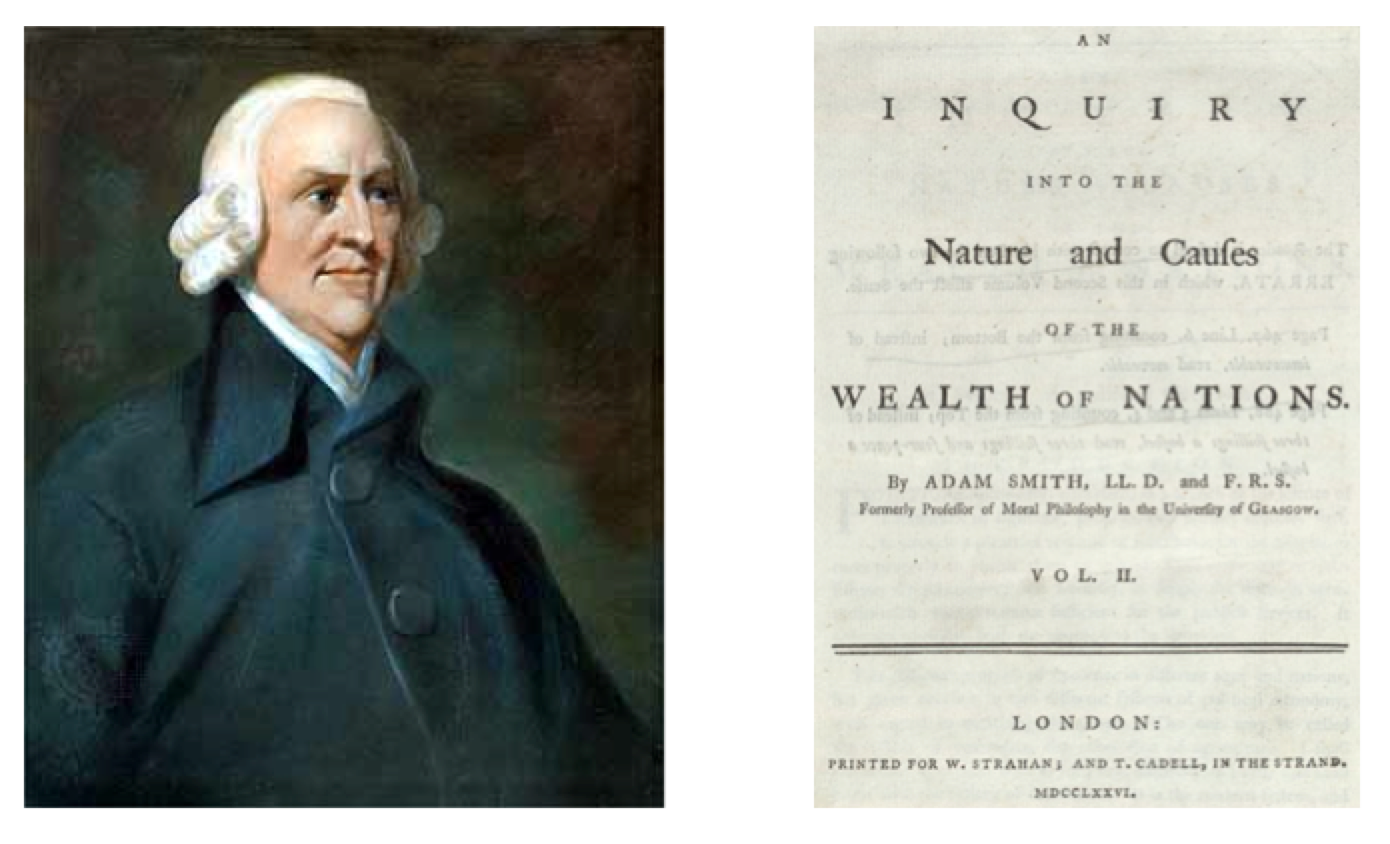
Economist Adam Smith's Wealth of Nations established the free market ideology that still influences many aspects of modern commercial and political thought. The Invisible Hand of the market proposes that the sum of individual actions in self-interest lead to a collective outcome that is more effective than that resulting from deliberate intention.
In this scenario, any negative consequences arising in the transition from mass to universal higher education are transitory and the Invisible Hand acts to stimulate and support the development of an effective qualification system. This shares many characteristics of evolutionary change in biological systems, with natural selection ruthlessly acting on less effective organisms to leave those best suited to the current conditions.
Technology is a fundament driver of this model, with every aspect of qualifications monitored, mediated and monetised. Content is licensed and monitored for legal compliance, offerings are tailored to individuals on the basis of sophisticated models that are used to identify interests and generate opportunities for education. Many of these are subtly influenced by commercial interests, if only through the introduction of advertising placements within educational content. Monetisation strategies are multilayered and in addition to the obvious advertising they include information on behaviour patterns that can be used to influence planning for future projects.
Learners in this scenario are acting to maximise the impact of their education on subsequent employment and personal success. Public spending is allocated in a model not dissimilar to the way that advertising operates in the contemporary web environment. The extent to which a given qualification model is used generates a revenue with public funding, various charitable foundations, commercial sponsors and advertisers all providing funding in proportion to the popularity of the offering.